

- Thu, 27 August 2026
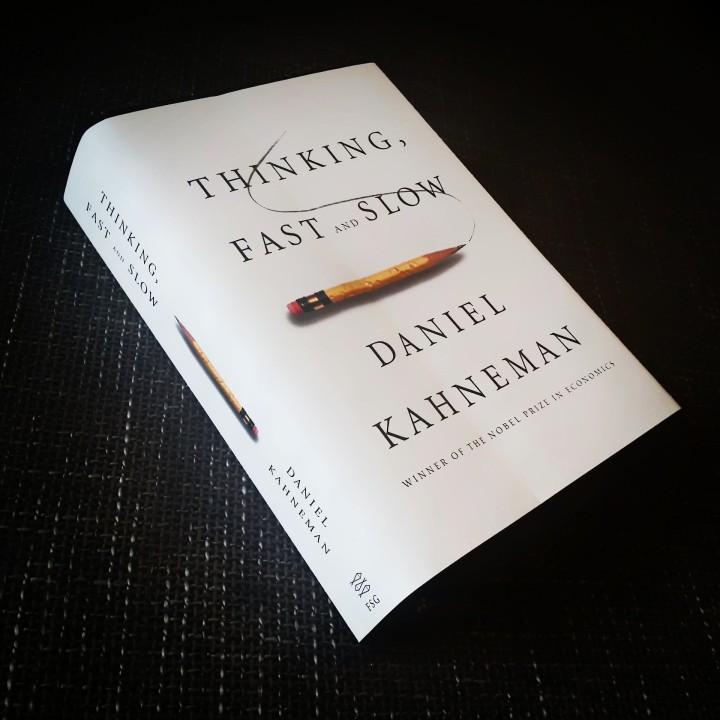
Most of us like to believe that we are rational thinkers. We think we evaluate facts, weigh alternatives, and then make logical decisions. Daniel Kahneman’s Thinking, Fast and Slow delivers a surprising reality check: our brains are far less rational than we think.
After spending decades studying human judgment and decision-making, Kahneman reveals that our minds operate using two different systems. One is fast, intuitive, and automatic. The other is slow, analytical, and deliberate. The fascinating part? Most of our daily decisions are made by the fast system, often without us realizing it.
Here are 12 powerful insights from the book that completely changed how I think about decision-making.
Kahneman calls them System 1 and System 2.
System 1 is fast, intuitive, emotional, and effortless. It helps you recognize a face, complete familiar phrases, or react instantly to danger.
System 2 is slower and more logical. It comes into play when solving a difficult math problem, evaluating an investment, or making a strategic decision.
The catch is that System 1 is in control most of the time, even when it shouldn’t be.
Our brains are designed to create stories from limited information.
Within seconds of meeting someone, we form judgments about their intelligence, trustworthiness, and competence. Once those judgments are formed, we unconsciously look for evidence that supports them.
This explains why changing opinions is often harder than forming them.
One of the most surprising findings in the book is that confidence and accuracy are not the same thing.
Experts, investors, managers, and even scientists frequently believe they know more than they actually do. Kahneman argues that overconfidence may be one of the most expensive cognitive biases in business and life.
If someone offered you ₹1,000, you’d be happy.
If someone took away ₹1,000, you’d feel much worse than the happiness you would have experienced from gaining it.
This phenomenon, called loss aversion, explains why people hold losing stocks too long, avoid necessary risks, and resist change.
One of Kahneman’s most famous ideas is “WYSIATI” – What You See Is All There Is.
Instead of searching for missing information, our brains build conclusions using whatever information is immediately available.
In other words, we often make decisions based on incomplete evidence while believing we have the full picture.
This is known as the anchoring effect.
If you’re told that a luxury watch costs ₹1 lakh before seeing another priced at ₹50,000, the second watch suddenly feels affordable.
The first number acts as an anchor, influencing your perception without your awareness.
When evaluating an experience, our brains don’t average every moment.
Instead, we remember two things: the most intense moment and the ending.
This “Peak-End Rule” explains why a single great customer interaction or a terrible final impression can shape our entire memory of an event.
We love stories about visionary founders, brilliant investors, and extraordinary leaders.
Kahneman reminds us that luck plays a much larger role than most people admit.
Recognizing the role of chance can make us more humble in success and more resilient in failure.
People would often rather accept a wrong answer than admit they don’t know.
Our brains are wired to seek certainty and create explanations, even when evidence is weak.
This is one reason misinformation spreads so easily.
When dramatic events occur, they dominate our thinking.
Plane crashes receive enormous attention, making flying seem dangerous, even though driving is statistically riskier.
Our perception of risk is shaped more by emotion than by actual probability.
Many people believe that gathering more data automatically leads to better choices.
Kahneman’s research suggests that beyond a certain point, additional information often increases confidence more than accuracy.
Sometimes clarity comes from focusing on the right information, not more information.
Perhaps the biggest lesson from the book is simple.
Important decisions deserve System 2 thinking.
Before making a major career move, investment, business decision, or life choice, pause. Challenge your assumptions. Ask what evidence you’re missing. Consider alternative viewpoints.
The extra time spent thinking critically can prevent costly mistakes.
Thinking, Fast and Slow is not just a psychology book; it’s a guide to understanding how our minds work. The book reveals that many of our mistakes are not caused by a lack of intelligence but by the shortcuts our brains naturally take.
The greatest value of Kahneman’s work is self-awareness. Once you recognize the biases influencing your thinking, you become better equipped to make smarter decisions, communicate more effectively, and navigate uncertainty with greater confidence.
The next time you’re absolutely certain about a decision, remember one of Kahneman’s most important lessons: the human mind is often most vulnerable when it is most confident.
For more such reccomendations, stay tuned to our blog. We promise you- we’ll bring you only the best of the best. #ReadwithGSN


contact@GrowthSenseNews.com
Sign up to get exciting updates through our newsletter- your one-stop for all things startup!