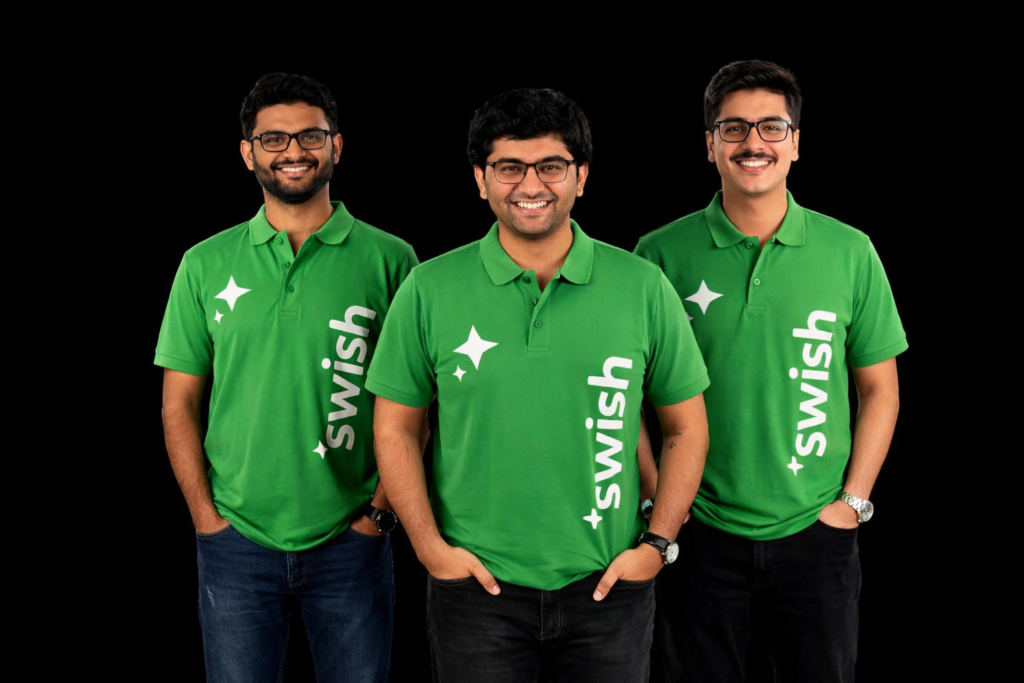
Bengaluru based Swish has raised 38 million dollars in a new funding round led by Hara Global and Bain Capital Ventures with participation from Accel. The round also included venture debt support from Alteria Capital and Stride Ventures.
The investment marks the company’s third funding round within sixteen months and pushes its valuation to around 140 million dollars post money.
The capital will be used to expand operations and strengthen its ultra fast delivery infrastructure.
Why this news matters
Ultra fast food delivery has seen mixed outcomes across the industry. Several major companies paused or scaled back their experiments in the space over the past year.
Swish moving forward with aggressive expansion signals that smaller focused players may still find opportunities where larger platforms stepped back.
What Swish does
Founded in 2024, Swish operates a 10 minute food delivery model supported by a network of cloud kitchens located close to high demand clusters.
By limiting delivery radius and optimizing kitchen placement, the company aims to improve turnaround speed and consistency.
Rapid growth in order volumes
The company reports that daily order volumes increased from about 5,000 to nearly 20,000 within just four months.
This rapid rise highlights growing customer adoption despite industry level uncertainty around the sustainability of ultra fast delivery formats.
Competitive landscape remains challenging
Swish operates in a segment where larger platforms such as Swiggy, Zomato and Zepto have already experimented with similar models.
Some of these initiatives were paused or scaled back, while others continue in limited formats.
Swish’s expansion suggests there is still room for innovation in how fast prepared meals reach urban consumers.
What comes next
The fresh funding is expected to help the company expand its cloud kitchen network and strengthen delivery infrastructure across demand clusters.
Its next phase of growth will likely test whether a focused ultra fast delivery strategy can succeed where broader marketplace models struggled.