10 Minutes to Your Door. But At What Cost?

Share this post :

Facebook
Twitter
LinkedIn
Pinterest
There’s no milk in the house?
No worries – you can get it in under 10 minutes.
Craving mangoes but too lazy to go out?
No worries — open your app and they’re at your doorstep in under 10 minutes.
Throwing a party but forgot the red cups?
No worries — you know the drill by now.
Anything you want.
Anything you crave.
Right in your hands.
But at what cost?

Credits : Snackfax

The rise of instant delivery platforms like Zepto and BlinkIt has revolutionised urban consumption, promising groceries at your doorstep in under 10 minutes. However, increasing reports of employee dissatisfaction and poor hygiene in so-called dark stores — the warehouses where goods are stored and packed — have raised serious questions. These facilities are stocked with everything from dairy and fruits to electronics, all to meet rapid delivery demands.

Ever thought how safe are these goods that arrive at our doorsteps so quickly?

According to a former Zepto employee at a Pune facility, workers were asked to pack and deliver expired dairy products and rotten groceries. “People think Zepto is hygienic. It’s not. The reality is disgusting,” he said, describing the conditions as unsanitary and unsafe.

More recently, Zepto Cafe came under fire when an Instagram influencer was allegedly served infested Maggi noodles.

Experts warn that while the industry has grown rapidly, basic safety standards — like those set by the FDA — have not scaled accordingly.

These concerns were validated by two major incidents:

  • Zepto’s Dharavi facility had its food license revoked by the Maharashtra FDA. The inspection found:

    • Food items with fungal growth

    • Unsanitary floors

    • Expired stock mixed with fresh goods

  • Blinkit’s dark store in Pune was also shut down after operating without a valid food license, violating core food safety laws.

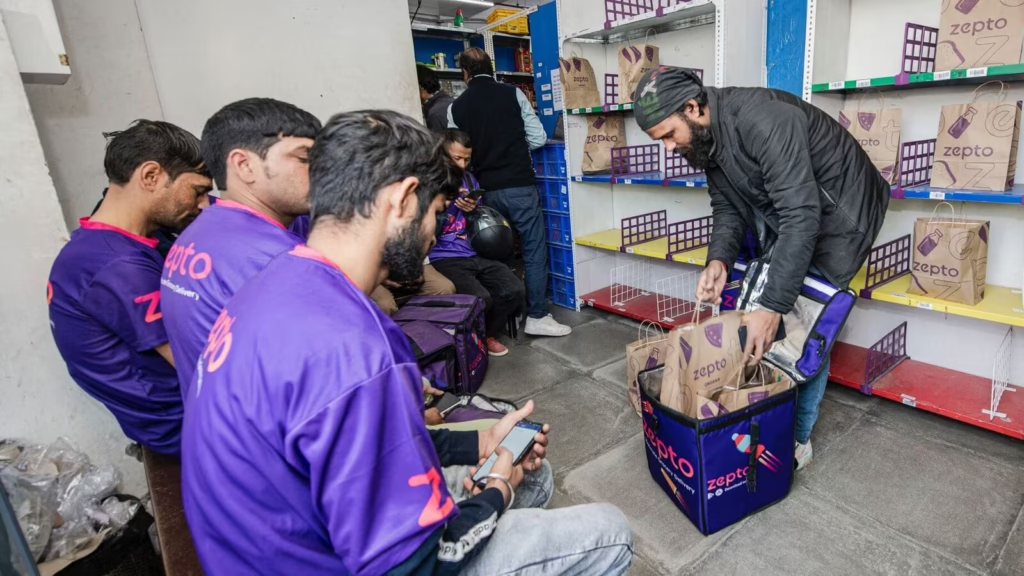
Credits: mint

Both stores are now open and in compliance. 

But the question is: Why did this problem occur in the first place?

These issues point to a larger systemic flaw: the intense pressure to deliver at all costs. Store managers are expected to hit high delivery metrics, often with minimal staffing and under lax supervision. In such an environment, shortcuts become tempting, especially when consequences seem rare or delayed.

Moreover, the workers — often contract employees — may lack proper food safety training. And without a robust system of internal audits or third-party inspections, violations can easily go unnoticed until someone speaks up — or gets sick.

credits: Shiksha

You are the Consumer. 

Ask yourself: Do you need everything instantly? 
Is getting instant gratification a bigger need than your health?
As consumers, it may be time to step back and reflect. Small actions can make a meaningful difference:

1. Consider buying perishables from local stores aka Kirane Ki Dukaan. 

2. Report any damaged, expired, or questionable products to the platform immediately

3. Check expiry dates on every item delivered

4. Take photographs of faulty or unhygienic items to support your complaints

5. Leave honest reviews to help inform other customers

6. Avoid ordering temperature-sensitive items during extreme weather conditions

7. Wash packaged fruits and vegetables thoroughly before use

8. Inspect all packaging for tampering, leakage, or improper sealing

9. Keep invoices or order confirmations for easier follow-ups

Before placing an order, ask yourself: is this urgent, or can it wait?


Credit for header image: Appslure

[This content is for informational purposes only and does not constitute legal, financial, or investment advice. This has been constituted based on third-party sources. We do not assume any liability for actions taken based on this information.]