


- Sun, 1 March 2026
In today’s era of freelancing, start-ups, and entrepreneurship, everyone seems to be chasing one thing: skill-building.
Founders want candidates who can deliver high-quality work, and young professionals rush toward anything that gives them a competitive edge: certification courses, higher degrees, internships, and often, unpaid internships.
But in this relentless race, are we forgetting something far more essential for success, not just in workplaces but in everyday life?
Technical and domain-specific skills are taught everywhere — from ABC platforms to XYZ courses.
Yet, interpersonal skills such as empathy, kindness, and emotional intelligence (EI) often remain neglected. These are the skills that help people connect, collaborate, and create. They shape motivation, teamwork, and leadership.
So where do we learn them?
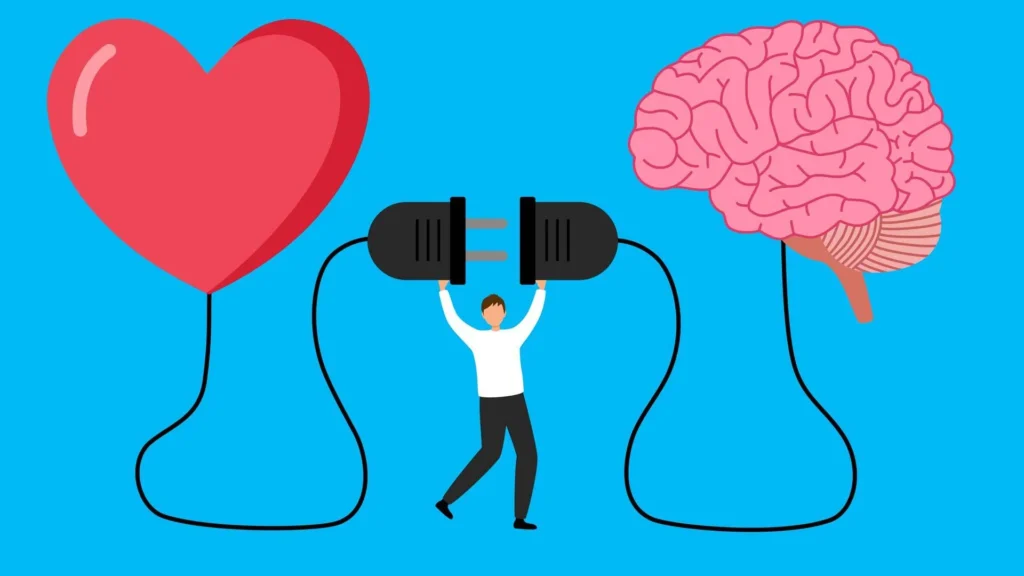
Long before the term “emotional intelligence” existed, philosophers wondered about the role of emotions in human life.
Aristotle, in Rhetoric, described emotions as “feelings that change the way we judge things.”
He recognised that emotions shape our moral decisions, how we understand others, and how deeply we connect.
Centuries later, psychologists John D. Mayer and Peter Salovey transformed these philosophical ideas into a scientific concept. In 1990, they defined emotional intelligence as:
“The ability to monitor one’s own and others’ feelings and emotions, to discriminate among them, and to use this information to guide one’s thinking and actions.”
Daniel Goleman later expanded this framework, making EI accessible and practical for workplaces and leadership.
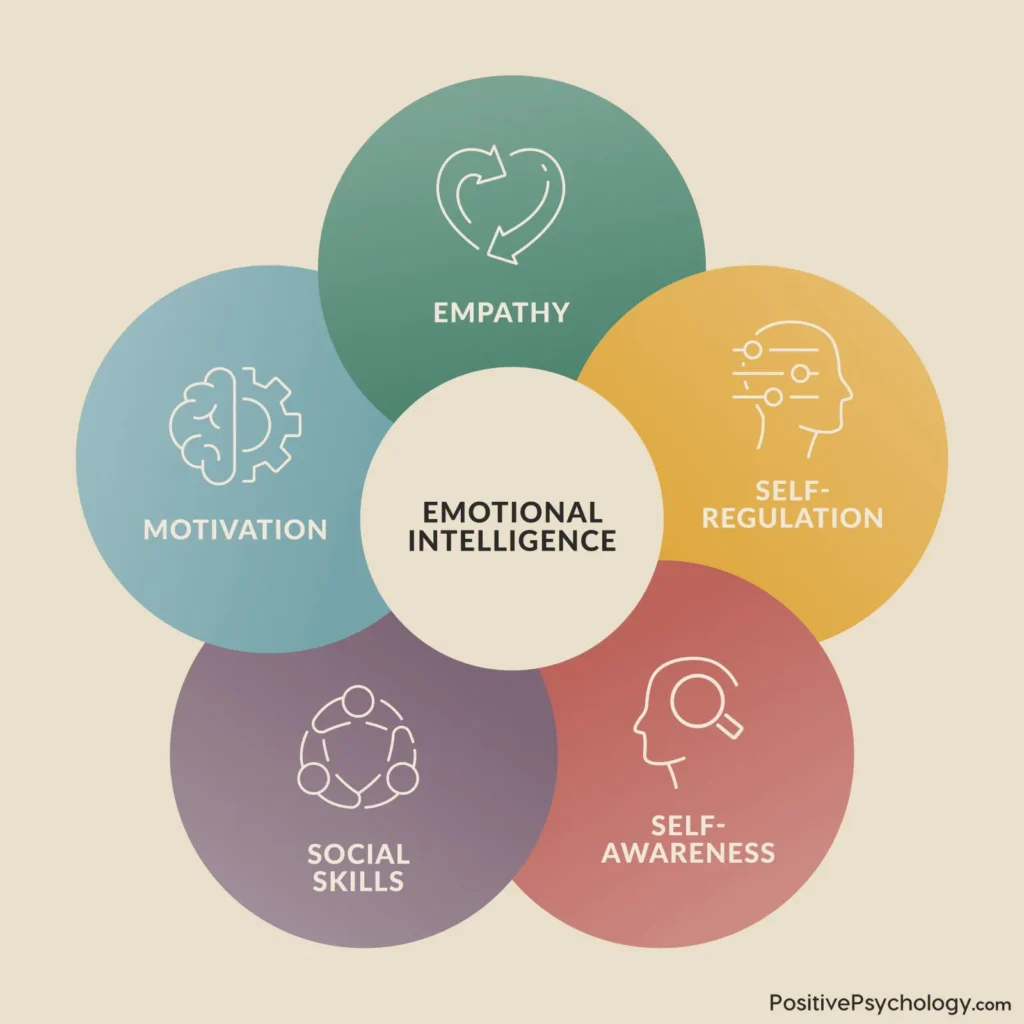
According to Goleman, effective leaders share five core components of emotional intelligence:
Self-awareness, self-regulation, motivation, empathy, and social skills.
Self-awareness is understanding your emotions, why they arise, and how they influence your behaviour. It includes recognising your strengths, weaknesses, and triggers.
Example:
A team leader knows that morning meetings irritate them because they haven’t mentally settled into the day. Instead of snapping, they adjust the meeting time or mentally prepare beforehand — preventing unnecessary conflict.
Self-regulation is not emotional suppression but the ability to pause, think, and respond intentionally.
Example:
A client rudely criticises a project. A reactive leader may argue. A self-regulated leader listens, acknowledges the frustration, and shifts the conversation toward solutions — maintaining professionalism and reducing tension.
Here, motivation is internal — driven by curiosity, a desire for improvement, and a passion for the work.
Example:
A product manager stays late not out of obligation, but because they’re excited to refine a feature. Their enthusiasm energises the entire team.
Empathy helps leaders understand others’ emotions and respond with sensitivity.
Example:
A sudden drop in performance prompts a leader to check in privately. They learn the employee is dealing with a family crisis. By adjusting workload and offering support, trust deepens — and the employee returns stronger.
Social skills involve communication, conflict resolution, influence, and relationship management.
Example:
Two departments disagree on deadlines. A leader skilled in communication brings both sides together, listens actively, and mediates a solution acceptable to all.
Goleman argued that while IQ and technical expertise may help someone enter a leadership role, emotional intelligence determines whether they will succeed in it.
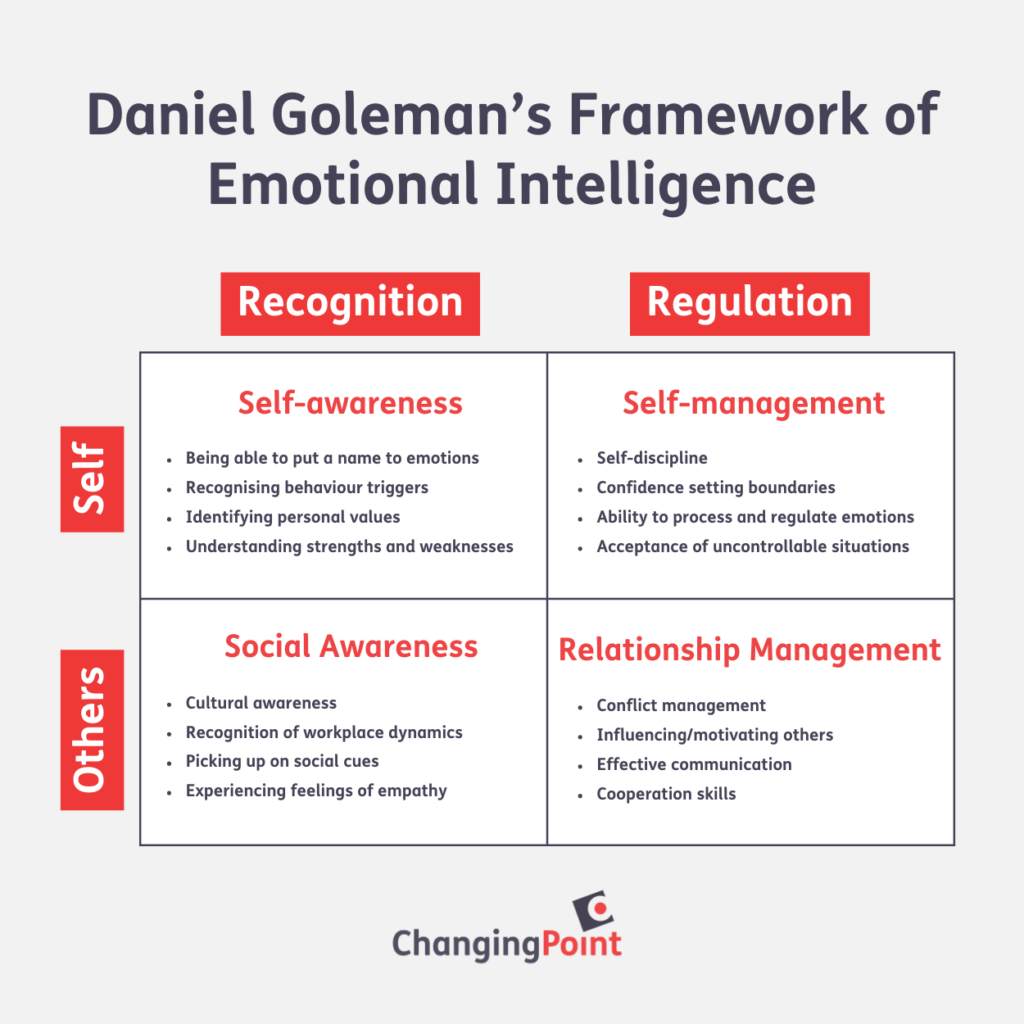
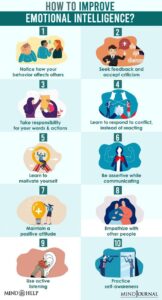
If emotional intelligence determines whether someone thrives, not just works, then the next question becomes: Can EI be improved?
According to Daniel Goleman, yes. And the development of EI happens through deliberate, everyday practices that strengthen the five essential components of emotional intelligence.
Self-awareness grows when individuals pay attention to their emotional patterns. Employees and leaders can maintain a brief “emotion log,” reflect on triggers, or pause during stressful moments to ask themselves: What am I feeling? Why am I feeling this? How is it shaping my response?
Regular feedback from colleagues also improves self-awareness, helping people understand how they are perceived in the workplace.
When people become conscious of their inner states, their reactions become more intentional rather than automatic.
Self-regulation does not mean suppressing emotions, but learning to respond rather than react.
Workplaces can encourage this by normalising short pauses before replying to emails or stepping away briefly when frustration rises.
Techniques such as mindfulness, grounding exercises, and cognitive reframing help individuals stay centred during conflict or criticism.
Leaders who model calmness create an environment where control replaces chaos.
To strengthen internal motivation, individuals must connect their work to a sense of purpose rather than only external rewards.
Setting personal growth goals, celebrating small improvements, and cultivating curiosity help employees remain driven even in challenging periods.
When organisations allow autonomy, recognise effort, and create opportunities for mastery, intrinsic motivation flourishes.
Empathy can be intentionally practised by listening without interrupting, acknowledging emotions even when solutions are not immediately available, and asking questions like: “How can I support you right now?”
Leaders can encourage empathy through team check-ins, open-door policies, and creating safe spaces where employees feel heard.
Empathy increases trust, strengthens collaboration, and makes workplaces more human.
Social skills grow through consistent communication practice—resolving conflicts respectfully, giving constructive feedback, facilitating group discussions, and building rapport across teams.
Encouraging cross-department collaboration, offering communication workshops, and promoting transparent interactions help individuals become better negotiators, mediators, and influencers.
For more such reccomendations, stay tuned to our blog. We promise you- we’ll bring you only the best of the best. #ReadwithGSN


contact@GrowthSenseNews.com
Sign up to get exciting updates through our newsletter- your one-stop for all things startup!