

- Thu, 27 August 2026
Most people try to change their lives through intensity. They wait for motivation, a new year, a breakup, a health scare, or a career crisis before deciding to reinvent themselves overnight. But real transformation almost never works like that.
The people who quietly build incredible careers, strong bodies, financial freedom, creative success, and disciplined lives usually do not rely on massive motivation. They rely on systems.
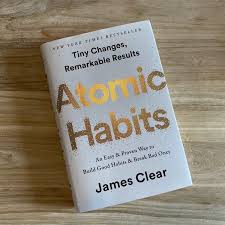
That’s the core idea behind Atomic Habits. The book is not really about habits. It’s about identity, environment, and the invisible behaviors shaping your future every single day while you barely notice them.
Once you understand that, you stop obsessing over giant breakthroughs and start respecting small actions. Because small actions compound into completely different lives.

Most people focus on outcomes. They want to lose weight, make more money, build a startup, or become more productive. But goals are temporary. Identity lasts.
One of the biggest mindset shifts in the book is understanding that lasting change happens when you stop asking, “What do I want to achieve?” and start asking, “Who do I want to become?”
A person who runs every day eventually becomes a runner. A person who writes consistently becomes a writer. A person who ships products consistently becomes a founder. Every small habit becomes evidence for the identity you are building.
One workout does not transform your body. One focused work session does not build a company. But every repetition reinforces identity. That’s why disciplined people often look calm. Their habits already became part of who they are.
People love talking about willpower because it sounds heroic. But most behavior is shaped by environment.
Your phone placement affects your focus. Your kitchen affects your diet. Your friend group affects your ambition. Your workspace affects your creativity. Most bad habits are not moral failures. They are environmental loops.
This is especially true in modern internet culture where apps are engineered to capture attention, food is engineered to be addictive, and algorithms are designed to keep you scrolling.
Smart people do not rely on endless self control. They redesign their environment. They make good habits obvious and bad habits inconvenient. That single shift changes everything.
Most people underestimate consistency because results are delayed. You go to the gym for two weeks and nothing changes. You publish content for one month and nobody notices. You save money for six months and still do not feel rich. So people quit.
But habits operate like compound interest. The payoff is delayed and then suddenly exponential.
This explains why successful people often look “overnight successful” after years of invisible repetition. The internet only notices the breakthrough. Nobody sees the tiny habits behind it.
The founder who suddenly builds a successful company probably spent years learning sales, product design, communication, hiring, writing, and resilience. The creator who explodes online probably posted hundreds of ignored pieces first.
Small improvements feel meaningless in the short term, but over years they create completely different realities.
Goals create direction.
Systems create progress.
That distinction changes how you approach life.
A goal is:
“I want to write a book.”
A system is:
“I write 500 words every morning.”
A goal is:
“I want to get fit.”
A system is:
“I train four times a week and track protein.”
Goals are emotional.
Systems are practical.
And the dangerous thing about goals is that people often become unhappy while chasing them.
They postpone happiness until achievement.
But systems create sustainable momentum.
They reduce decision fatigue.
They turn progress into lifestyle.
That’s why elite performers often obsess over routines.
Routines remove chaos.
One of the smartest ideas in the book is reducing friction.
Humans naturally choose convenience.
So instead of trying to become superhuman, reduce resistance.
Want to read more?
Keep books visible.
Want to work out consistently?
Prepare clothes beforehand.
Want to stop doomscrolling?
Delete addictive apps.
Want to write online?
Create a setup where publishing feels effortless.
People think successful individuals have infinite discipline.
Often they simply built lives where good behavior is easier.
This matters massively for founders and creators.
When work feels overwhelming, friction quietly kills momentum.
The easier your system becomes, the more likely you are to stay consistent during difficult weeks.
Bad habits rarely destroy your life instantly.
That’s what makes them dangerous.
One skipped workout feels harmless.
One impulsive purchase feels harmless.
One distracted day feels harmless.
But repeated behaviors slowly shape self perception.
Eventually people stop trusting themselves.
That’s the hidden psychological cost.
You don’t just lose progress.
You weaken identity.
And once someone believes:
“I’m lazy.”
“I’m inconsistent.”
“I never finish things.”
They unconsciously act according to that story.
This is why rebuilding self trust matters so much.
Keeping tiny promises to yourself changes confidence.
Confidence is often evidence based.
Not motivational.
Modern productivity culture creates unrealistic expectations.
People think successful individuals are perfect every day.
But long term success usually comes from recovery speed.
Missing once is normal.
Missing repeatedly becomes identity.
The important thing is returning quickly.
This idea sounds simple but it’s psychologically powerful.
Because perfectionism destroys momentum.
People miss one day and emotionally spiral.
Then they abandon the habit entirely.
But sustainable growth requires flexibility.
Especially in modern life where burnout, distractions, stress, and uncertainty are constant.
The people who win long term are usually the people who restart fastest.
Humans imitate behavior.
Constantly.
Ambition spreads.
Laziness spreads.
Health spreads.
Financial habits spread.
Mindsets spread.
This becomes obvious when you look at startup ecosystems.
Why do certain cities produce ambitious founders repeatedly?
Because behavior becomes normalized.
When everyone around you builds, learns, creates, invests, and improves themselves, growth feels natural.
The opposite is also true.
If your environment punishes ambition or discipline, progress becomes emotionally harder.
That’s why curating your digital environment matters too.
The creators you follow.
The content you consume.
The conversations you engage with.
All of it shapes your standards.
Most people dramatically overestimate motivation and underestimate automation.
The future is often determined by repeated behaviors that feel insignificant today.
Daily walks.
Daily reading.
Daily saving.
Daily writing.
Daily learning.
Daily focus.
The scary part is that life compounds either way.
Good habits compound.
Bad habits compound too.
That’s why small choices matter more than people realize.
Not because one decision changes your life.
But because repeated decisions create trajectories.
And trajectories eventually become lifestyles.
The reason Atomic Habits became so influential is because it gives people a more realistic way to change.
Not through extreme motivation.
Not through dramatic transformation.
But through small repeated actions that slowly reshape identity.
That idea feels especially important today.
Modern life constantly pushes people toward distraction, inconsistency, and instant gratification.
So the ability to build intentional habits becomes a competitive advantage.
Not just for productivity.
But for mental clarity.
Health.
Creativity.
Wealth.
Focus.
And ultimately the kind of person you become.
“Every action you take is a vote for the type of person you wish to become.”
“You do not rise to the level of your goals. You fall to the level of your systems.”
“Success is the product of daily habits, not once in a lifetime transformations.”
“Habits are the compound interest of self improvement.”
“Environment is the invisible hand that shapes human behavior.”
“Be the designer of your world and not merely the consumer of it.”
“Changes that seem small and unimportant at first will compound into remarkable results if you’re willing to stick with them for years.”
“Professionals stick to the schedule. Amateurs let life get in the way.”
For more such reccomendations, stay tuned to our blog. We promise you- we’ll bring you only the best of the best. #ReadwithGSN


contact@GrowthSenseNews.com
Sign up to get exciting updates through our newsletter- your one-stop for all things startup!